
Case Study
Polar Academy
Embedding STEM experiments into Arctic expeditions for at-risk youth.
We helped the Polar Academy, who work with at-risk youth suffering from bullying, bereavement and trauma, to establish a long-term scientific programme integrating STEM techniques into its biannual expeditions to East Greenland.
Collaborating with leading academic institutions (Universities of Cambridge, Oxford and St Andrews) and biotechnology firms, the programme aims to collect scalable and longitudinal environmental data in remote regions where high-quality measurements are currently lacking. This initiative empowers student participants to contribute directly to global open-source databases and nature recovery efforts.
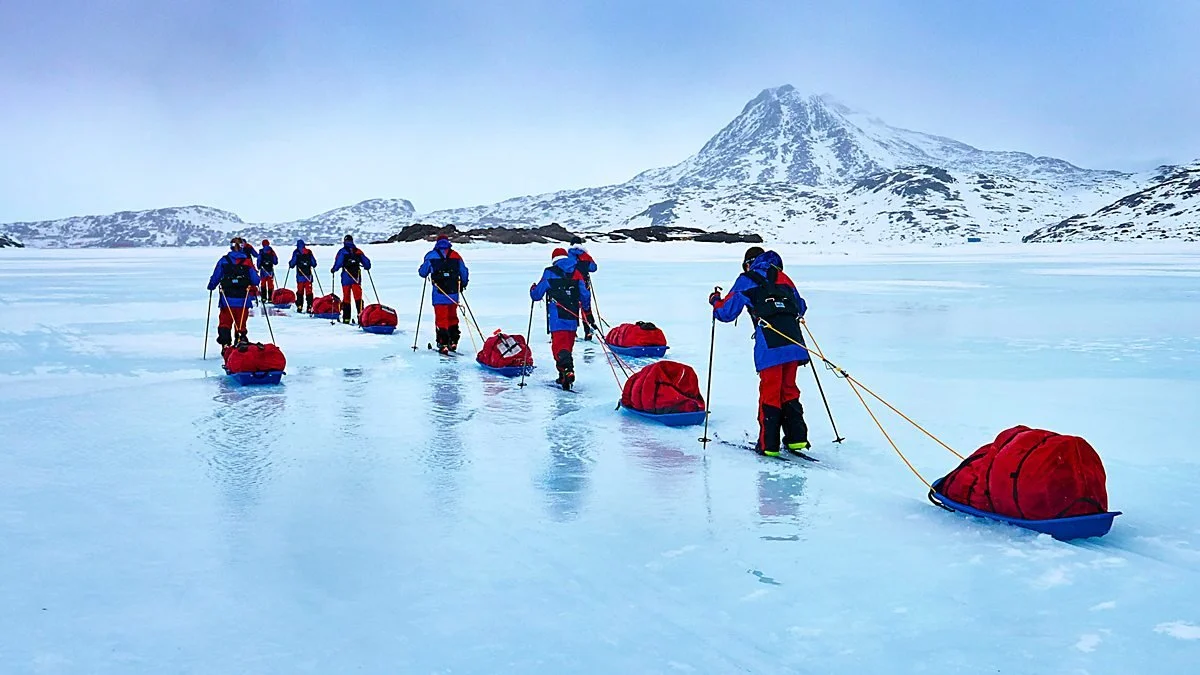
The primary goals of the project were to:
Provide ground-truth data: Supply essential field measurements to validate and improve global climate models for Arctic regions.
Monitor Arctic change: Establish longitudinal records of biodiversity, snow density, and pollution levels over annual and decadal timescales.
Foster STEM engagement: Train expedition participants in simple yet robust scientific methodologies, transforming handheld devices and basic tools into sophisticated "pocket labs."
Project goals
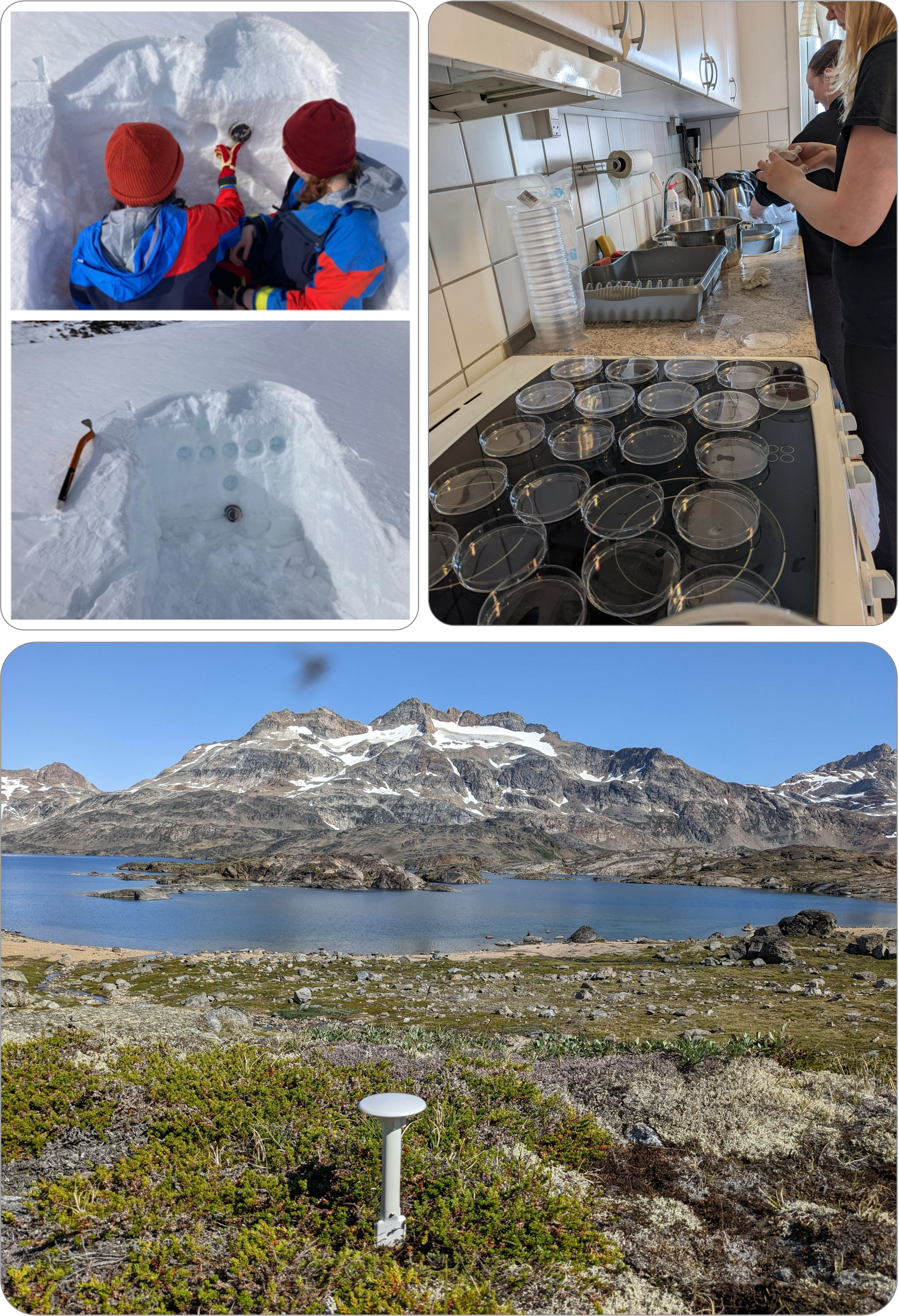
We developed a collaborative methodology involving experts from the Universities of Oxford, Cambridge and St Andrews, as well as institutes such as GEUS, 5Gyres and Nature Metrics, to implement four core experiments in eastern Greenland:
Snow Density & Temperature: Using lightweight tools and robust remote sensors to map snowpack changes at multiple depths.
eDNA Sampling: Sequencing environmental DNA from frozen lakes to track species distribution and biodiversity.
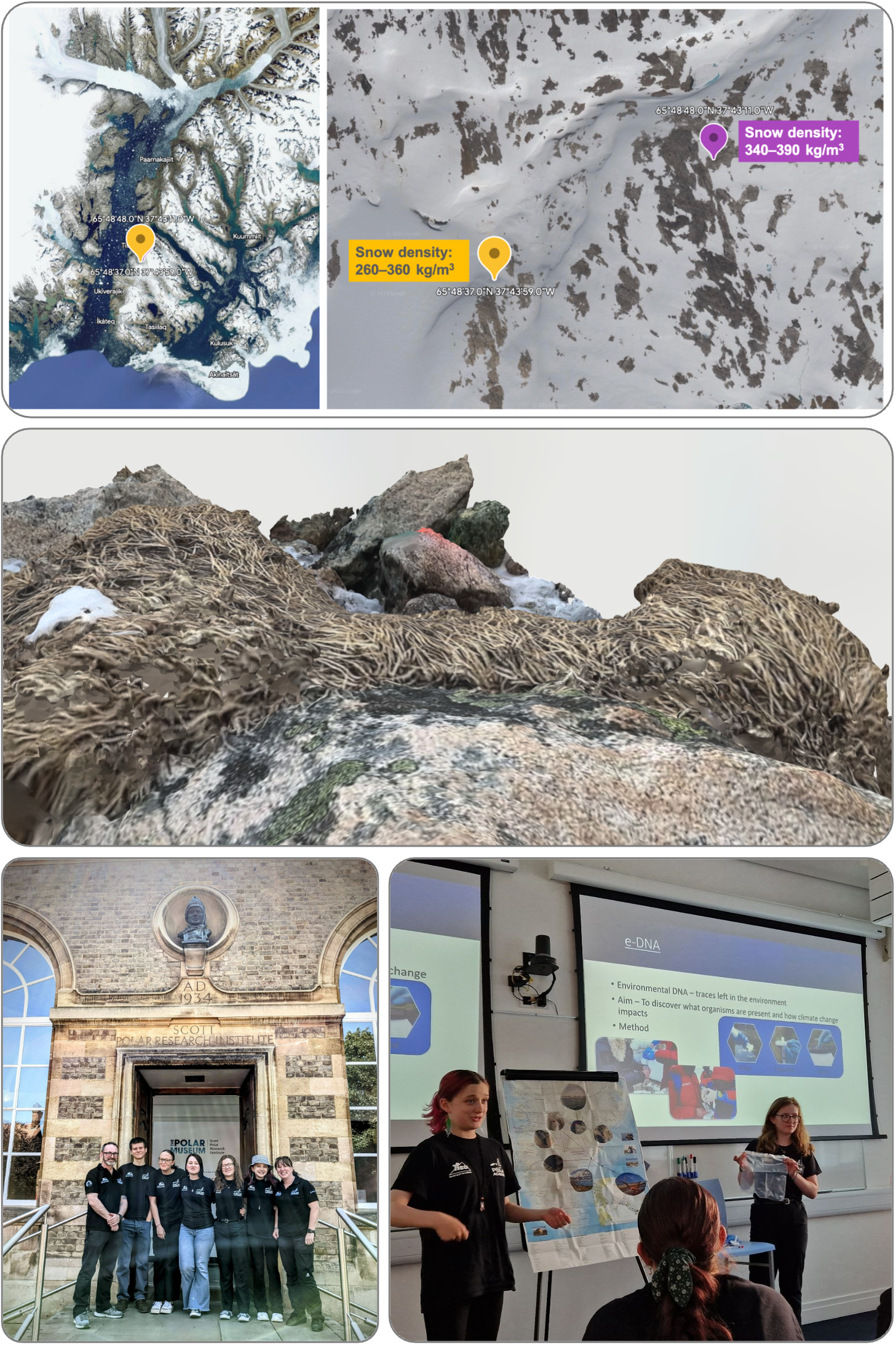
Handheld LiDAR: Leveraging laser hardware on consumer iPhones/iPads to create high-resolution 3D digital models of Arctic biota and rock formations.
Microplastic Tracking: Utilizing petri dishes and sticky tape transects to monitor the deposition of airborne microplastics.
Approach
Successful pilot studies in East Greenland: We piloted snow density and eDNA sampling in remote regions near Tasiilaq, identifying specific methodological challenges for Arctic fieldwork.
Climate model contribution: Formal agreements reached to provide snow density data and metadata to the Geological Survey of Denmark (GEUS) global database.
"eBioAtlas" collaboration: Partnered with Nature Metrics to contribute local biodiversity data to a global atlas used by non-profits and academic institutions.
Digital preservation: Created a "LiDAR bank"—a digital repository of high-resolution models for preserving information on Arctic flora and geological formations.
Academic knowledge exchange: Students presented their findings and methodological reflections during guest lectures at the Universities of Oxford and Cambridge in the summers of 2023 and 2024.
Key results
The Polar Academy plans to refine its methodologies and establish permanent study sites in future expeditions. Ongoing collaboration with the 5Gyres Institute aims to publish airborne microplastic findings in peer-reviewed academic journals, while data sharing with global databases remains a core priority for ensuring the programme's long-term scientific impact.