
Case Study
Spare Labs
Annual impact reporting to highlight its social impact, environmental sustainability and agency growth.
In his capacity as Director of Data Science at Spare, Jerome Mayaud led the production of Spare’s Global Impact Reports from 2023 to 2025. These were targeted at both customers and potential hires, to demonstrate how the company achieves its mission to "unlock the potential of mobility for everyone".
Over this three-year span, Spare expanded its reach from 10 million cumulative rides in 2023 to 28 million annual boardings by 2025, and the reports showed, through robust data-driven storytelling, that technology can lower operational costs for transit agencies while drastically improving service for underserved populations.
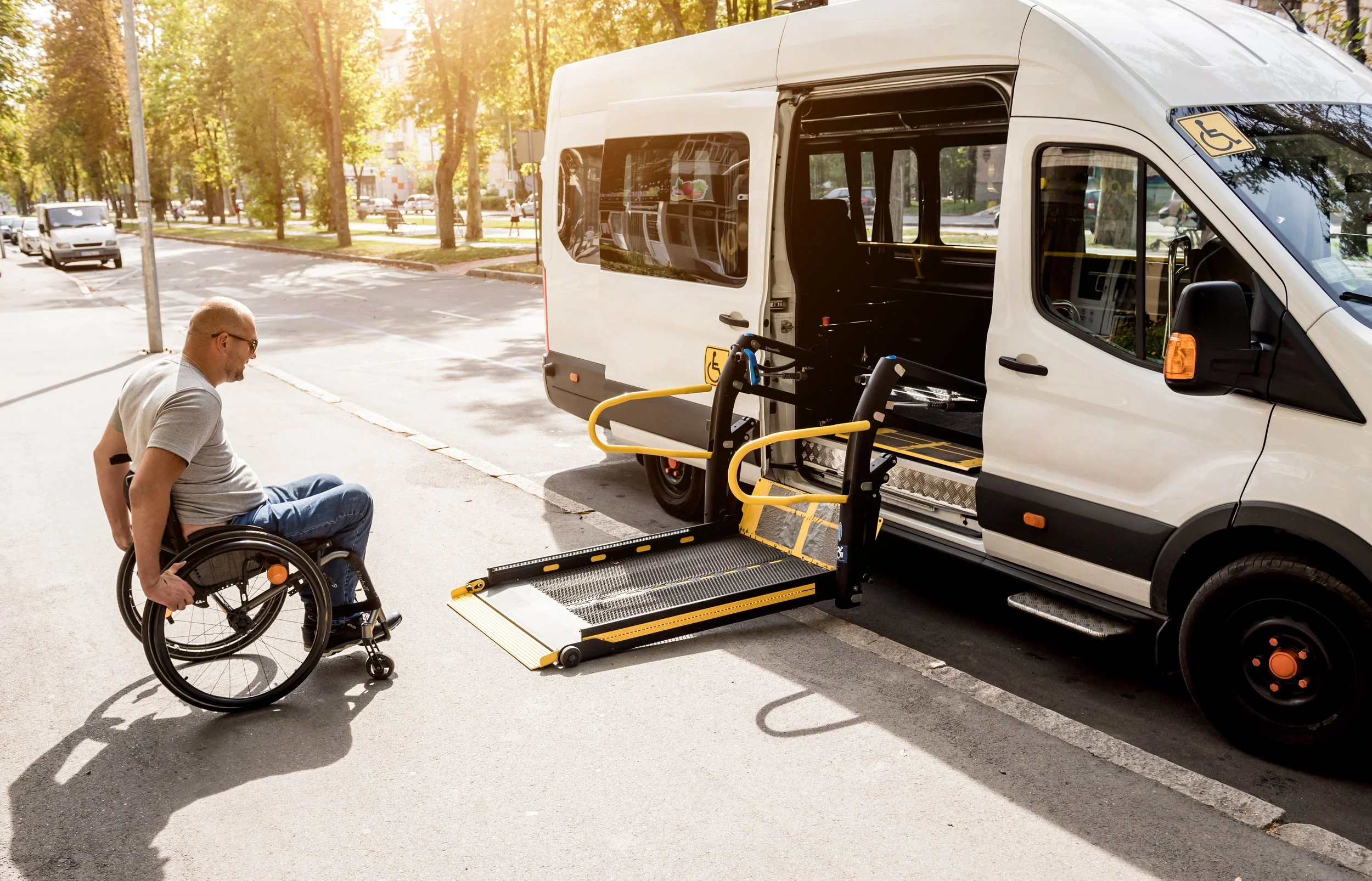
The primary goals of the project were to allow Spare to tell stories around its core propositions to transit agencies:
Empower underserved communities: Ensure every person—regardless of income, age, or physical ability—has safe and reliable access to jobs, healthcare, and education.
Maximise agency efficiency: Utilize AI-powered routing and unified operations to lower per-trip costs and expand service capacity with limited resources.
Decarbonise transportation: Drive a "virtuous cycle" of transit adoption by luring riders away from personal vehicles toward shared, sustainable, and increasingly electric mobility
Project goals
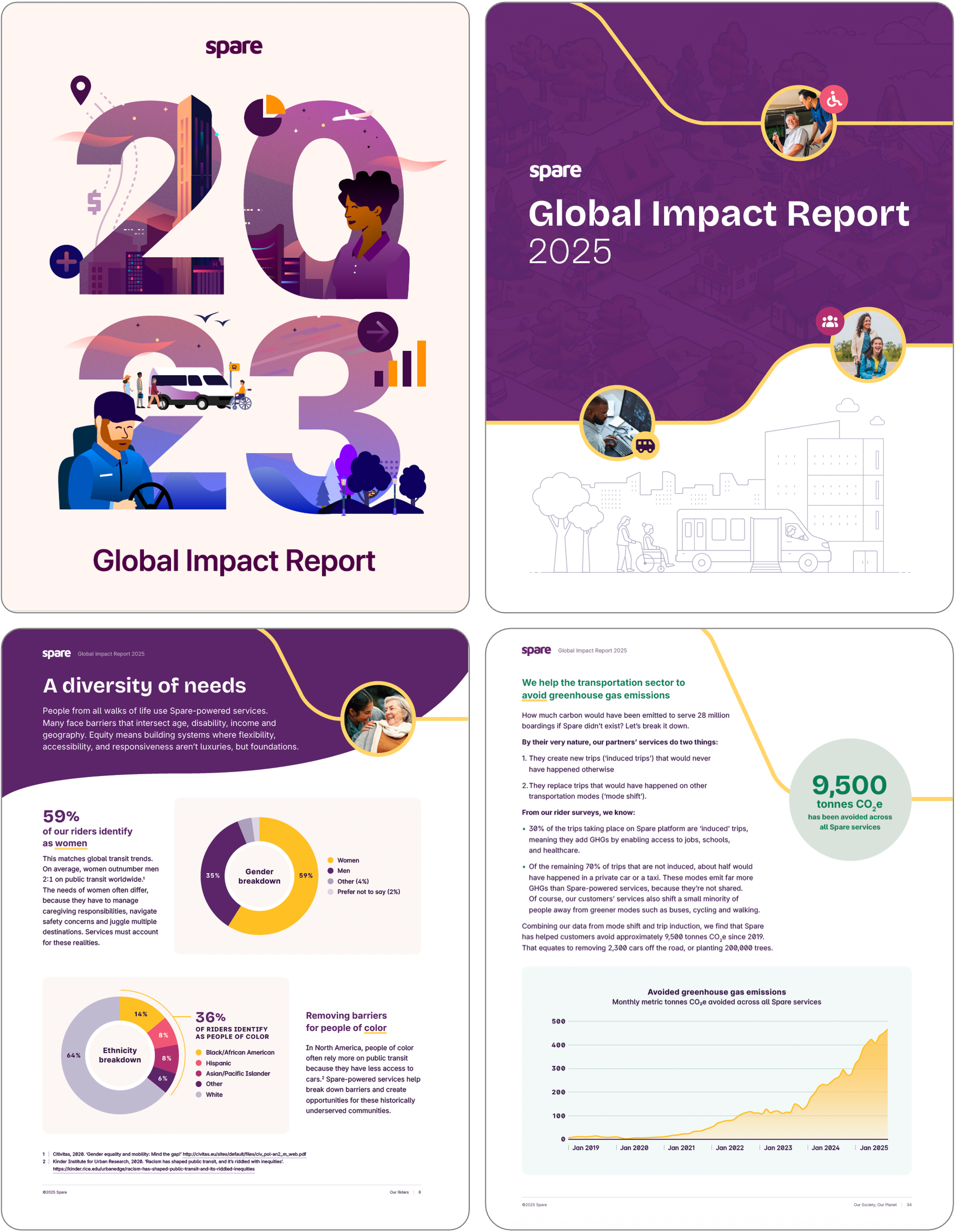
We used Spare’s extensive ridership database of high-resolution travel data, and combined it with a unique collection of biannual digitized rider surveys and intersectional data analysis.
Much of the analysis performed for the impact reports was reported in a peer-reviewed journal article written by Jerome Mayaud.
Approach
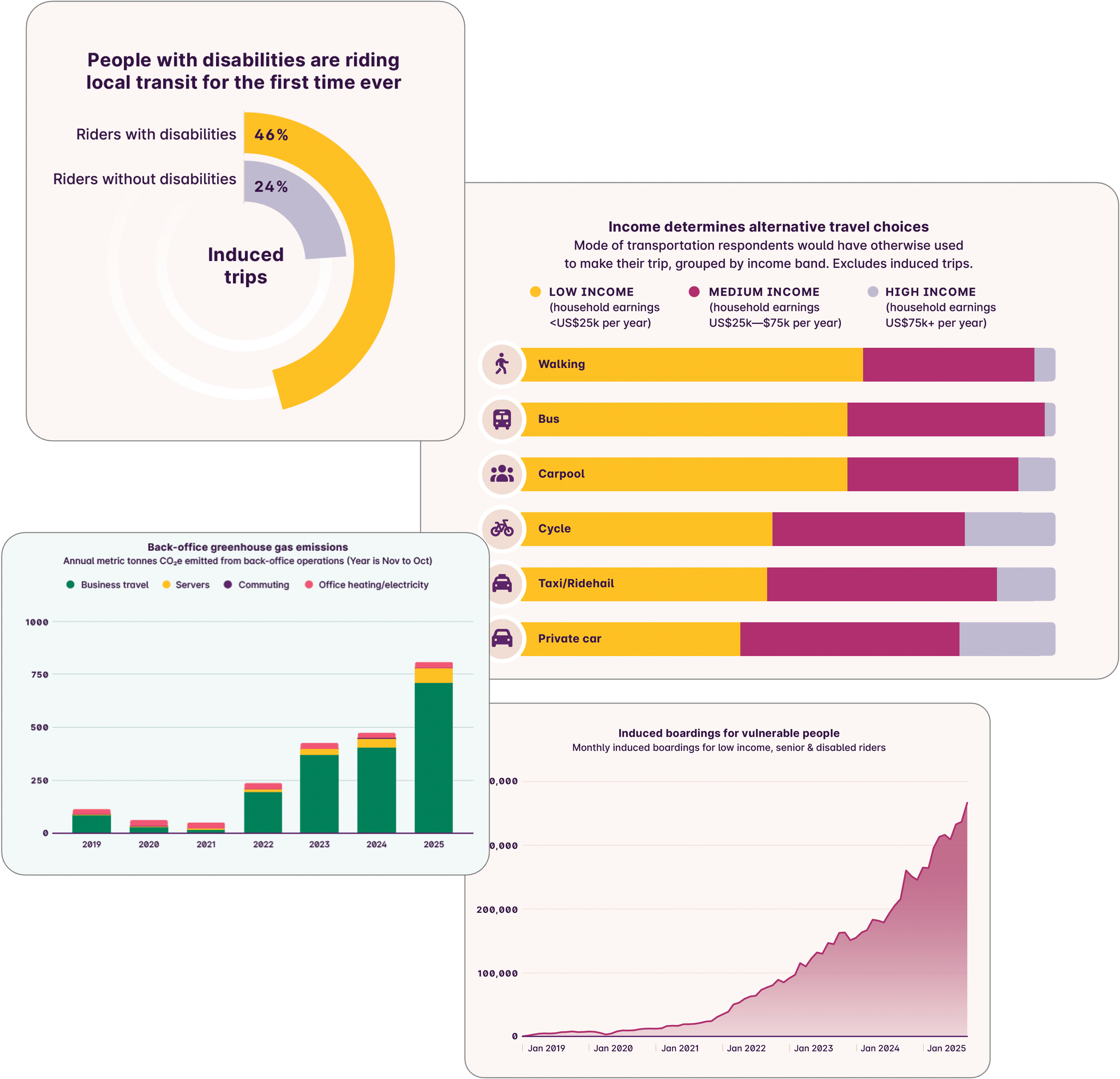
Accessibility: Cumulative "induced" trips for vulnerable populations grew from 2.8 million in 2023 to 8 million in 2025, with same-day paratransit service reaching 2.7 million completed trips.
Loneliness mitigation: 61% of riders (and up to 85% in paratransit) reported reduced social isolation, creating an estimated 52 million new "social collisions" by 2025.
Operational savings: Agencies saw sustained cost reductions, with microtransit costs dropping by up to 45% and paratransit costs by 32% since 2022.
Environmental impact: Avoided emissions grew from 3,100 tonnes of CO2e in 2023 to 9,500 tonnes avoided in 2025, supported by the distance traveled in electric or hybrid vehicles doubling every year.
Economic health benefits: For every $1 spent on on-demand transit, the healthcare sector saves $4.50 in costs related to senior isolation.
Income equality: Median household income for riders remains consistently low at $20k, with services costing on average only 2% of household income.
Key results
As Spare enters its second decade, the focus is shifting from "testing what's possible" to delivering smarter, more complex systems that serve evolving regions with fewer resources. Future efforts will prioritize deep co-creation with agency partners to strengthen the human elements of transit through data and automation, ensuring infrastructure stands the test of time. Impact reporting will continue to thrive in this new era for Spare.