
Case Study
Translink
Identifying promising neighbourhoods for demand-responsive transit (DRT) in Vancouver.
This project, led by Jerome in his capacity as Director of Research & Consulting at Spare, investigated the feasibility of implementing a new demand-responsive transit (DRT) service in Metro Vancouver. TransLink, the client, asked us to identify underperforming fixed-route buses that could be supplemented or replaced using DRT.
The report shortlisted five promising zones across the metro region, and various demand and operational scenarios were tested against existing fixed-route services. Ultimately, the goal was to provide TransLink with data-driven insights on service performance, cost implications, and equity benefits to inform future transit planning in line with the Transport 2050 strategy.
The primary goals of the project were to:
Identify the most promising zones across Metro Vancouver for on-demand microtransit interventions, categorized by use cases such as replacing underperforming routes, establishing new evening/night services, and serving new geographies.
Evaluate the performance and financial viability (cost recovery ratio, cost per boarded passenger) of proposed DRT services compared to current fixed-route operations.
Project goals
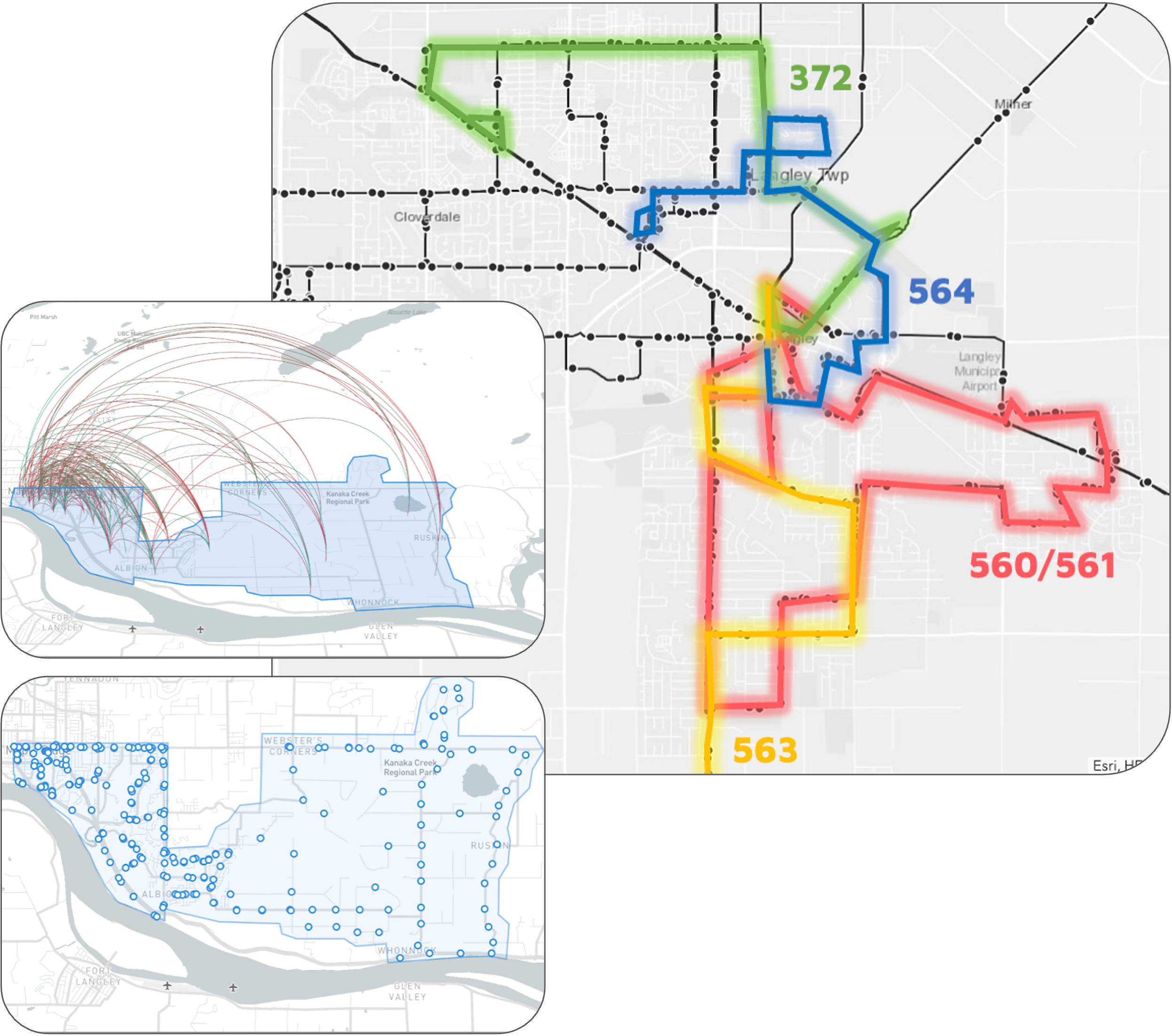
We used proprietary Spare Realize software to simulate over 30 scenarios for the five shortlisted zones, incorporating TransLink's post-COVID ridership forecasts and comparing door-to-door versus stop-to-stop operational models. The analysis prioritized maintaining or reducing current operational costs and aligning service quality (wait times) with fixed-route headways to ensure a practical comparison.
Approach
Cost efficiency: All five presented zones showed the potential for lower annual agency costs and improved cost recovery ratios (CRR) compared to the existing fixed-route services they would replace or supplement. Some zones had CRRs of 0.5–0.6, which is high for a transit service.
Service equity improvements: Most proposed zones offered significant increases in both population and job coverage (up to 3,100 more residents covered) by expanding service into transit-poor areas, albeit sometimes at a higher cost per trip.
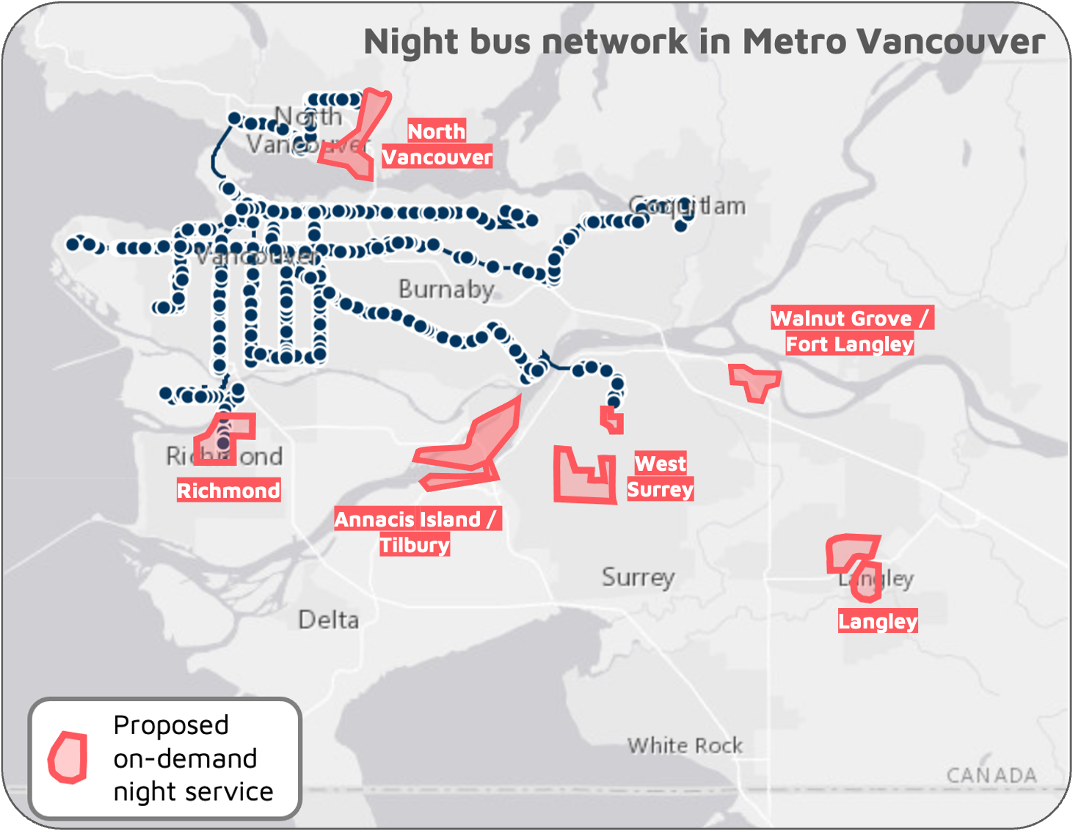
Convenience of night service: We proposed several night services which, while having a low CRR, would provide high socio-economic impact by offering transit access for an underserved population of late-shift workers.
Key results
We strongly recommended TransLink should proceed with pilot programs for the high-potential zones. However, this has yet to materialise.
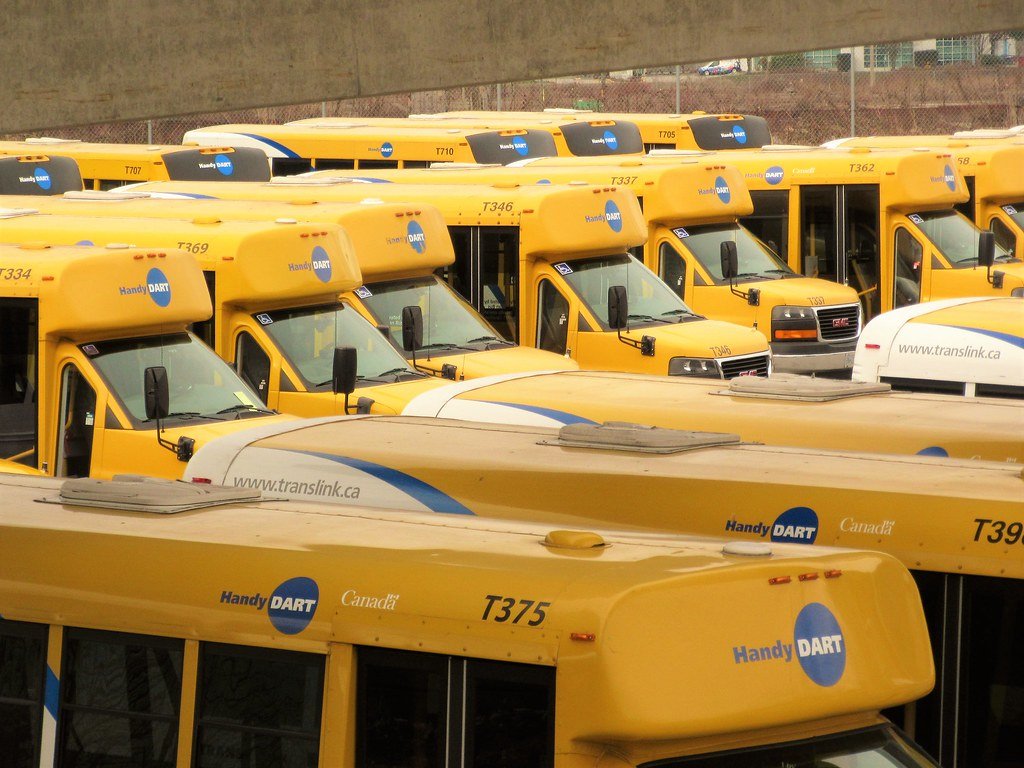
We proposed win themes such as commingling services with HandyDART paratransit and adopting non-dedicated trip brokering to realize greater long-term cost savings. Spare has since won the contract for powering the HandyDART service.