
Case Study
Wing Woman
Analyzing the drivers and barriers to the adoption of reusable diapers among vulnerable families in Lebanon.
This project, prepared for WingWoman, an NGO based in Lebanon, evaluated a pilot initiative to replace expensive, single-use diapers with locally manufactured reusable versions for vulnerable families. The analysis was based on two major household surveys conducted in late 2023, tracking 437 respondents before distribution and 379 after receiving the products.
The study aims to address NGO concerns regarding water availability, hygiene, and the long-term cost-effectiveness of reusable solutions in a crisis-hit economy.
Project goals
The primary goals of the project were to:
Understand uptake factors: Identify the specific determinants that influence whether a family continues to use or abandons reusable diapers.
Assess social impact: Measure the effect of reusable diapers on household stress levels and financial savings.
Optimise design & training: Use data-driven insights to empower Wing Woman staff to improve diaper fit, instructions, and awareness campaigns.
We used a mixed-methods analysis, joining pre- and post-distribution survey datasets to identify correlations between demographics and diaper usage.
Key variables analyzed included baby age/gender, household size, water access, and the method of product delivery (direct vs. awareness session). We also conducted a deep-dive into the stated reasons for abandonment, specifically looking at perceived costs and health concerns.
Approach
High diaper success rate: 72% of families reported they would continue using the reusable diapers, with another 14% stating they might.
Significant stress reduction: 92% of continued users reported reduced stress levels, particularly those who initially had high stress regarding diaper access.
Awareness is critical: Families who received diapers via an awareness session were significantly more likely to continue use (75%) compared to those who did not (50%).
Target demographics: Reusable diapers are most successful in large households, families with children over 24 months, and families who already use some reusables.
Barriers identified: The primary reasons for stopping use were the cost of washing (35%), time (33%), and baby health concerns (23%). Abandoning families reported spending twice as much on maintenance ($2.30) as those who continued ($1.34).
Key results
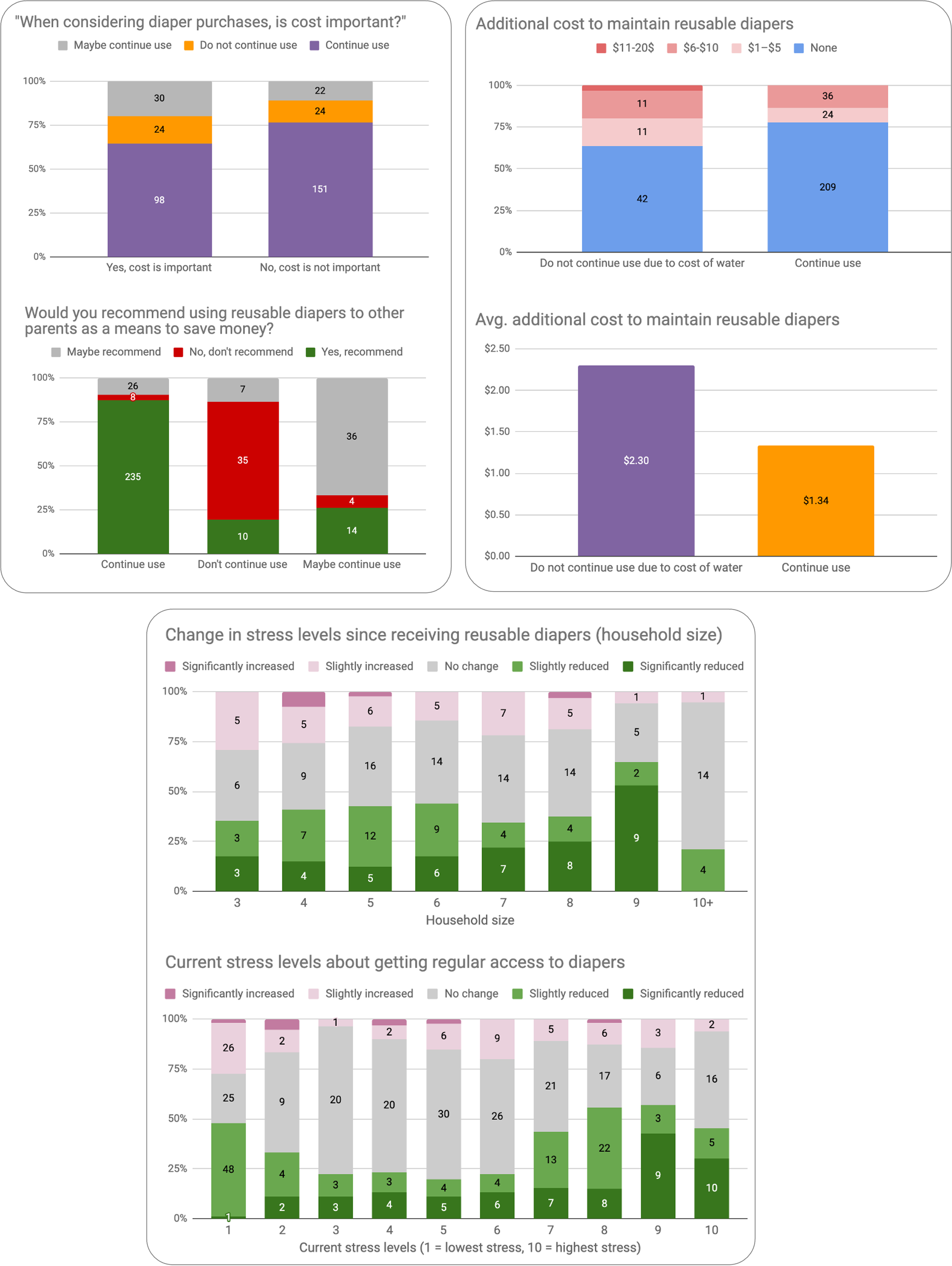
We recommended to WingWoman to expand awareness sessions, as information sharing is the strongest predictor of long-term adoption. Future efforts should likely focus on investigating reported ill-health effects (~25% of abandonments) to determine if they are real or perceived and training families on water-efficient cleaning methods to mitigate costs.